01 Road signs
Road signs fall into warning (red-bordered triangle), priority, prohibition (red-bordered circle), mandatory (blue circle), information and service signs. Shape and colour hint at meaning: a triangle warns, a red-ringed circle forbids, a plain blue circle mandates a direction or manoeuvre.
21
Turning around is prohibited:
- A At crosswalks and in tunnels
- B On bridges, overpasses and under them
- C At railway crossings
- D When visibility of the road is less than 100 m in at least one direction
- E In all the above cases
22
Is the driver of the red car allowed to continue driving in this situation?
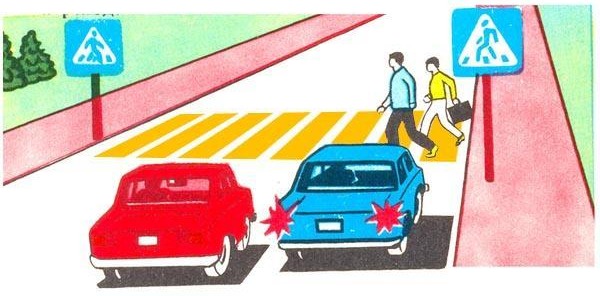
- A Allowed
- B Prohibited
23
Is the driver of a red car allowed to drive on the tramway?
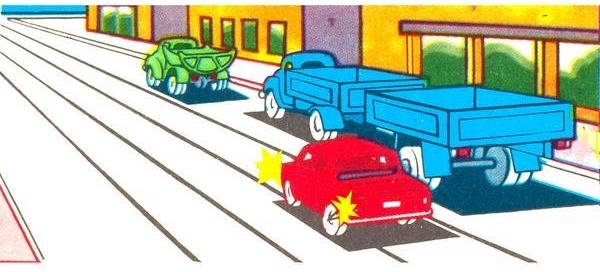
- A Allowed
- B Prohibited
24
In which direction is traffic allowed?
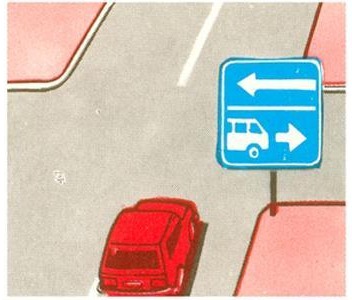
- A Left only.
- B Straight, left and U-turn
- C Straight ahead only
25
The drivers of which vehicles violated the requirements of the road sign?
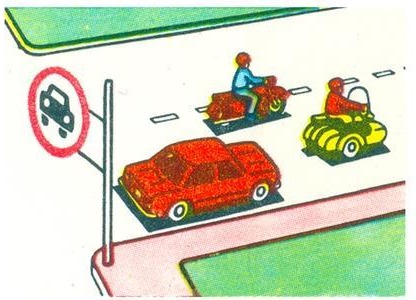
- A Motorcycle drivers
- B Drivers of a car and a motorcycle with a side trailer
- C Car driver only
- D Drivers of all vehicles
26
The driver of which vehicle has first priority?
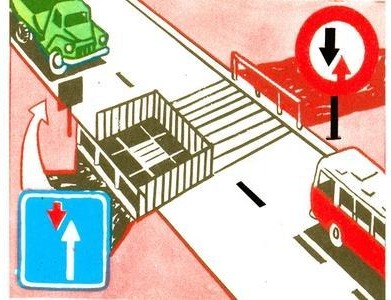
- A Truck driver
- B Bus driver
27
If it is difficult to pass on the slopes marked with the appropriate sign, you must give way
- A To a vehicle going downhill
- B To a public vehicle
- C Vehicle going uphill
28
When crossing the road concurrently with oncoming vehicles, the road must be given way by
- A The driver of the vehicle on the left
- B The driver of the vehicle on the right
29
Must the busdriver on the established route give way in this situation?
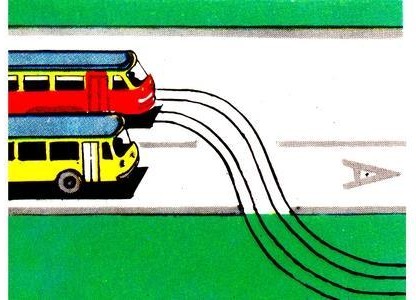
- A He must
- B He must not
- C He must not, because he is driving straight ahead
30
The driver of which vehicle must give way?
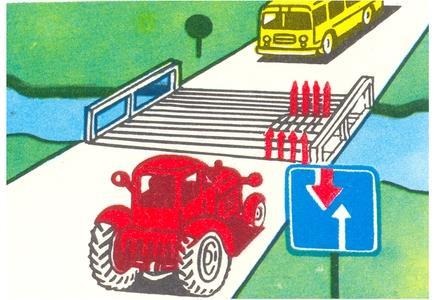
- A Tractor driver
- B Bus driver
31
Which of the following has the advantage in traffic:
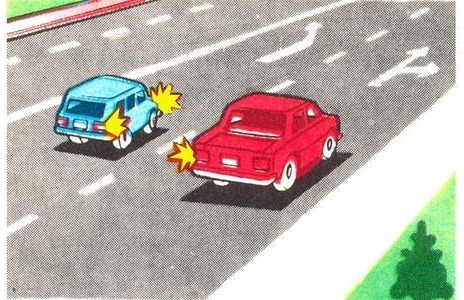
- A Blue car, as red changes direction to the left.
- B Red car, as the red car is on the right when changing lanes at the same time.
- C Blue car, as it is on the left side when changing lanes at the same time
32
The driver of which vehicle must give way?
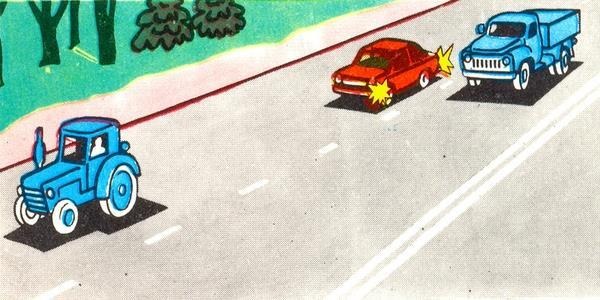
- A Driver of a passenger car.
- B Truck driver
33
The driver of which vehicle must give way?
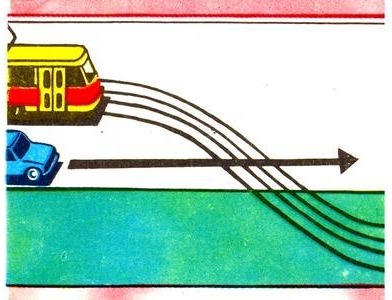
- A Bus driver
- B Tram driver
34
Are drivers of vehicles in populated areas required to give way to public vehicles starting from a designated and equipped haulting point?
- A Yes
- B No
35
The driver of which vehicle must give way?
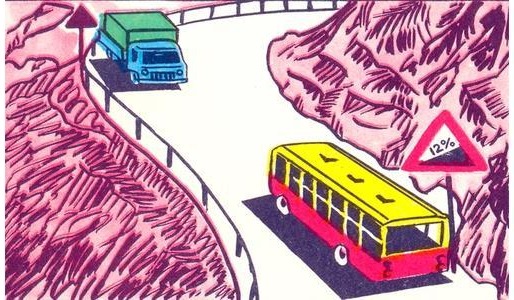
- A Bus driver
- B Car driver
36
Specify the order of passing the intersection
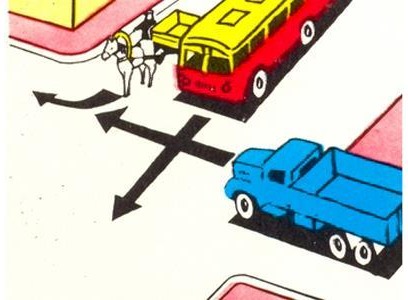
- A Bus, truck, horse-drawn carriage.
- B Bus and horse-drawn carriage, truck
37
On oncoming traffic, on steep descents, you must give way:
- A The driver of a public vehicle
- B The driver of the vehicle going uphill
- C Driver of vehicle moving downhill
38
Are vehicles performing regular transportation of passengers on all roads allowed to occupy the leftmost lane of a road that has 3 or more lanes in one direction?
- A Allowed when overtaking
- B Allowed, when making a left turn or a U-turn
- C Allowed in all cases
39
The driver of the white passenger car in this situation
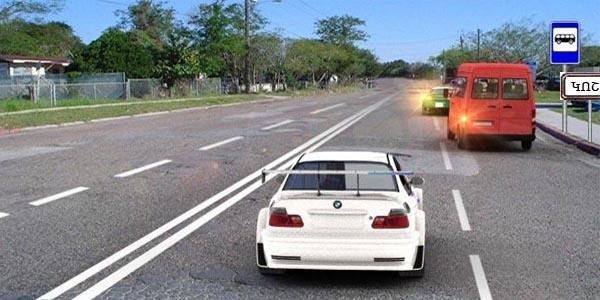
- A Must give way to the bus, which begins to move from the designated place of the stop.
- B has the advantagein traffic, as the bus is switching to the second lane.
40
Are public vehicles in populated areas allowed to occupy the leftmost lane of a road that has 3 or more lanes in one direction?
- A Allowed when overtaking.
- B Allowed when making a left turn or U-turn.
- C Allowed in all cases.