09 Special vehicles and signals
Every road user must give way to a vehicle running a blue (or red) flashing beacon with its siren on — even if that means departing from a sign or marking — as soon as it can be done safely.
21
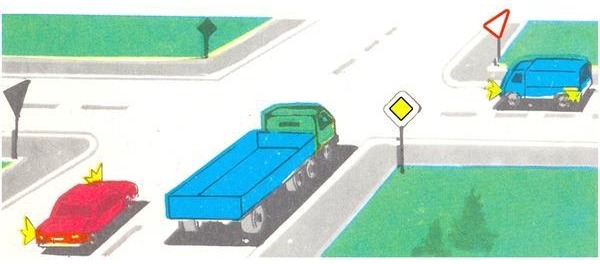
The blue car will drive through the intersection:
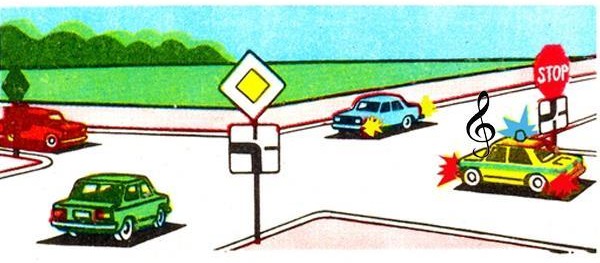
- A The first.
- B The second.
- C The third.
- D The last.
22
The driver of which vehicle has first priority?
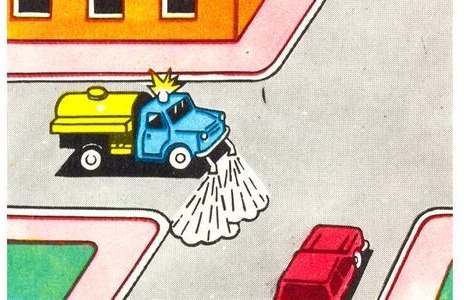
- A The driver of a road vehicle.
- B The driver of a passenger car.
23
The driver of which vehicle must give way?
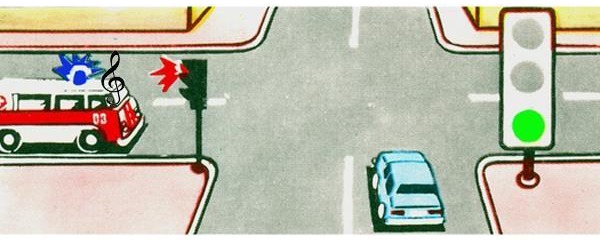
- A Driver of an ambulance.
- B Driver of a passenger car.
24
Does a flashing yellow (orange) beacon on a vehicle give you the right of way?
- A Yes, it does.
- B No, it does not.
25
The driver of the vehicle with the white and moon colored beacons on gives a special sound signal to:
- A Gain an advantage in traffic over other road users.
- B To attract the attention of police officers and other persons.
26
At what distance is it prohibited to overtake till the railway crossing?
- A Up to 50 m ahead.
- B Up to 100 m ahead.
- C Up to 150 m ahead.
27
Is the driver of a car allowed to overtake in this situation?
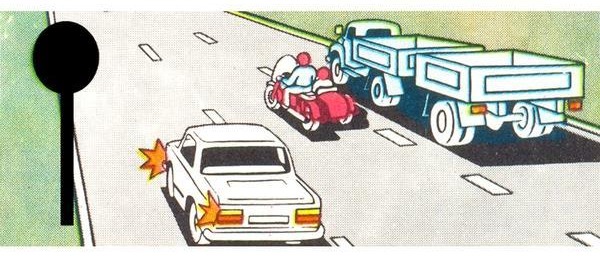
- A Allowed.
- B Allowed if the speed of the motorcycle is less than 30 km/h
- C Prohibited.
28
The driver of a vehicle equipped with a blue flashing beacon has priority over other road users if:
- A Turned on the flashing beacon.
- B Beeps a special sound signal.
- C Turns on the flashing beacon and gives a special sound signal.
29
Is it allowed to overtake vehicles in the area of the intersection on the road, which is the main road in relation to the crossing?
- A Allowed.
- B Prohibited.
30
Overtaking is prohibited:
- A At intersections.
- B Closer than 150 m to a railway crossing.
- C In both cases.
31
Overtaking is prohibited:
- A At regulated intersections.
- B At unregulated intersections.
- C In both cases.
32
Is the driver of a green car allowed to overtake?
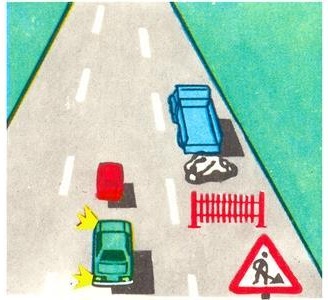
- A Allowed.
- B Prohibited.
- C Allowed if the red car is traveling at less than 30 km/h.
33
Is it allowed to overtake a bus at this point?
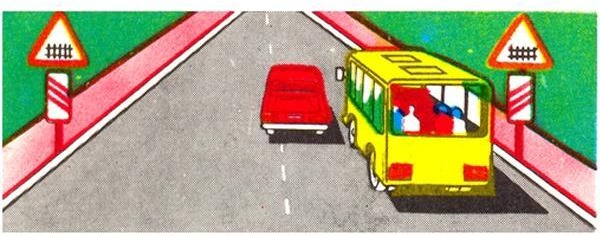
- A Allowed.
- B Prohibited.
34
Is it allowed to overtake a road train in this situation if it is moving at less than 30 km/h?
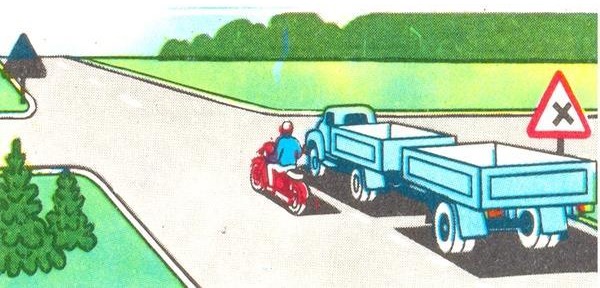
- A Prohibited.
- B Allowed.
35
Is the driver of a red car allowed to overtake in this situation?
- A Allowed.
- B Prohibited.
- C Allowed, provided that the speed of the overtaken is less than 30 km / h.
36
Overtaking vehicles, is:
- A Overtaking one or more vehicles in traffic, connected with leaving the oncoming traffic lane.
- B Overtaking of one or more vehicles in traffic, connected with departure from the occupied lane.
37
In darkness and poor visibility conditions, regardless of road lighting, on a moving motor vehicle must be on:
- A High beam headlights.
- B Low beam headlights.
- C High or low beam headlights.
38
What is the first thing a driver should do when being blinded by oncoming headlights?
- A Switch the high beam headlights (if on) to low beam.
- B Switch onthe emergency light alarm.
- C Make a sound signal: one long and three short ones.
- D Make the sound signal: one short and three long beeps.
39
When driving at night on unlit sections of roads on a motor vehicle must be switched on:
- A Headlights with high or low beam.
- B Only low beam headlights.
- C High beam headlights only.
40
When should a motorcycle have its low-beam headlights on during daylight hours?
- A When driving in low visibility conditions.
- B On a malfunctioning motorcycle on the way to a parking place.
- C In any case, when driving.
- D When transporting a sick passenger.