
09 Special vehicles and signals
Every road user must give way to a vehicle running a blue (or red) flashing beacon with its siren on — even if that means departing from a sign or marking — as soon as it can be done safely.
41
Sound signals can only be used:
- A In populated areas, to warn other drivers of their intention to overtake.
- B When it is necessary to prevent a traffic accident.
- C In both cases.
42
Rear fog lights can be used:
- A When driving in a convoy in the dark time of day.
- B When driving in tunnels.
- C Only in conditions of insufficient visibility.
- D When unloading cargo at night.
- E In all the above cases.
43
At what distance to an oncoming vehicle should the high beam headlights be switched to low beam?
- A 100 m.
- B 150 m.
- C Not less than 300 m.
44
At what distance from the beginning of the hazardous area is this warning sign placed in populated areas?
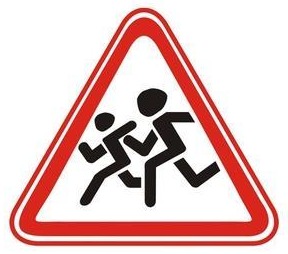
- A 25 -50 m.
- B 50 -100 m.
- C 100 -150 m.
45
At what point is it allowed to cross railroad lines?
- A Where visibility on both sides is at least 1000 m.
- B At the discretion of the driver in aconvenient location.
- C In places provided for that purpose.
- D At a distance of not less than 1000 m from railway stations.
46
The headlamp is allowed to be used:
- A Only outside populated areas when there are no oncoming or passing vehicles.
- B Only in conditions of insufficient visibility.
- C In any places, if it is necessary.
- D In the dark time of the day on all sections of roads.
47
Is it allowed to transport agricultural, road, construction and other machines and mechanisms through the railway crossing?
- A Allowed if the crossing is not equipped with a barrier.
- B Allowed if they are in non-transport position.
- C Allowed if they are in transport position.
48
Is it allowed to unauthorizedly open the barrier or bypass it while on duty?
- A Prohibited.
- B Allowed.
- C Allowed at driver's discretion if there is no approaching train in the vicinity.
- D Allowed if there is no crossing guard on duty.
49
Is it allowed to transport agricultural, road, construction and other machines and mechanisms through the railway crossing?
- A Allowed.
- B Allowed if they are in the transport position.
- C Prohibited.
50
Is it permitted for pedestrians to travel on a road marked "Motorway"?
- A Prohibited.
- B Allowed to walk only outside populated areas in the direction of vehicular traffic.
- C Allowed to walk outside settlements in the course of vehicle traffic.
51
The vehicle's emergency lights must be on:
- A In a traffic accident.
- B When forced to stop in places where stopping is prohibited.
- C In both cases.
52
What should guide the driver when approaching a railroad crossing:
- A The position of the barrier and traffic signals.
- B The requirements of road signs and markings.
- C Instructions of the person on duty at the crossing.
- D All the requirements listed.
53
On highways, the movement of vehicles whose speed according to the technical specification or condition is less than 40 km/h:
- A Only the rightmost lane is allowed.
- B Prohibited.
- C Allowed if there is no "Minimum Speed Limit" sign.
54
The vehicle's emergency lights must be on:
- A In a traffic accident.
- B When towing (on a motor vehicle being towed).
- C When forced to stop in places where stopping is prohibited.
- D In all the cases listed.
55
At what distance from the vehicle set the sign "Emergency stop"?
- A In populated areas -not less than 15 m, outside populated areas - 30 m.
- B In populated areas -at least 10 m, outside populated areas -20 m.
- C In settlements -at least 5 m, outside settlements -10 m.
56
The vehicle's emergency lights must be on:
- A In a traffic accident.
- B When towing (on a motor vehicle being towed).
- C In both cases.
57
An intersection is considered regulated if the order of traffic at it is determined:
- A Only by traffic light signals.
- B ՕOnly by traffic signals.
- C In both cases.
58
The vehicle's emergency lights must be on:
- A When the driver is blinded by the headlights.
- B When towing (on a motor vehicle being towed).
- C In both cases.
59
In built-up areas, the entrances to which and exits from which are marked with road signs "Residential area" and "End of residential area՛՛, is not prohibited:
- A Movement of pedestrians on the roadway.
- B Through traffic of vehicles.
- C Educational driving.
60
If a rough road has a paved section just before the intersection, does that make it equal in value to the road being crossed?
- A No.
- B Yes.